






A strong CNA resume can open the door to hospital units, long-term care facilities, rehab centers, and home health roles. But many qualified Certified Nursing Assistants miss out on interviews because their resumes fail to clearly show their skills, clinical exposure, and value to a care team.
Healthcare recruiters spend 6-7 seconds scanning each resume. If your resume is cluttered, vague, or missing key details, it gets passed over, no matter how qualified you are.
Here’s the reality: 73% of resumes never reach human eyes because they fail automated screening systems. But most CNA resume mistakes are easy to fix once you know what to look for.
Section 1: Format & First Impressions
Overloading the Resume With Dense Paragraphs
One of the most common issues in CNA resumes is the use of long paragraphs to describe job duties. While the intention may be to include as much information as possible, dense text makes it harder for hiring managers to identify key qualifications quickly.
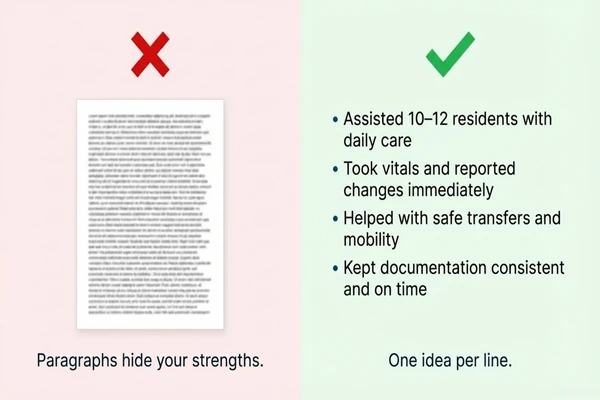
A clear structure allows employers to see the types of responsibilities handled in previous roles immediately.
For example, instead of describing responsibilities in a paragraph, a clearer format would look like:
- Assisted 10-12 residents with daily care
- Took vitals and reported changes immediately
- Helped with safe transfers and mobility
- Kept documentation consistent and on time
Section 2: Content That Shows Your Skills
Using Vague Language Instead of Clear Responsibilities
Another frequent issue is the use of vague phrases that do not clearly explain the role a CNA played in patient care. Words such as helped with, assisted with, or responsible for often appear repeatedly on resumes but provide little detail about the actual work performed.
Healthcare employers are looking for evidence of specific clinical tasks and responsibilities. Describing actions in more precise terms helps demonstrate competence and experience.
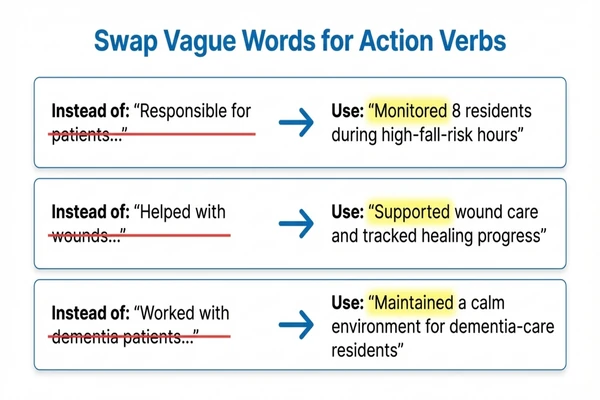
- Monitored 8 residents during high-fall-risk hours
- Supported wound care and tracked healing progress
- Maintained a calm environment for dementia-care residents
Missing Key Clinical Skills
Certified Nursing Assistants perform a wide range of clinical and supportive tasks, yet many resumes fail to highlight these skills clearly. In some cases, candidates focus only on general qualities like being compassionate or hardworking while leaving out the technical abilities employers are searching for.
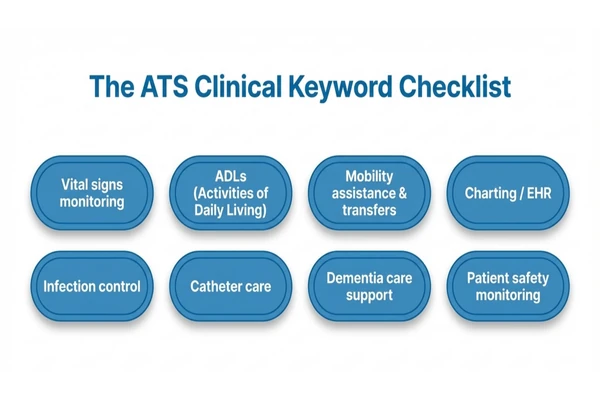
Common clinical skills employers look for include:
- Vital signs monitoring
- ADLs (Activities of Daily Living)
- Mobility assistance and transfers
- Charting/EHR
- Infection control
- Catheter care
- Dementia care support
- Patient safety monitoring
Poor Placement of Certifications
For CNAs, certifications are one of the most important parts of the resume. However, they are sometimes placed too far down the page or presented in a way that is easy to overlook.
Employers need immediate confirmation that a candidate holds an active certification and meets state requirements. Placing certifications near the top of the resume helps ensure this information is visible right away.
A typical format might include:
Certifications
- CNA State of California (Active)
- CPR/BLS Certified Exp. 08/2026
For new CNAs:
- Certified Nursing Assistant, California Dept. of Public Health
- Completed: SisuCare CNA Training Program, March 2024
Not Showing Patient Count or Workload
Healthcare employers often want to understand the scale of responsibilities a CNA has handled. A resume that only lists tasks without context may not fully reflect the level of experience the candidate brings.
Adding simple details such as patient load or unit size can help provide that context.
- Managed care for 10-14 residents per shift
- Supported a 30-bed memory care unit
- Assisted during high-volume rounds (25+ residents)
Section 3: Strategic Elements
Skipping the Resume Summary
The resume summary is a short section at the top of the document that introduces the candidate and highlights key strengths. Although it only contains a few sentences, it often shapes the first impression recruiters form.
Without this summary, hiring managers must scan the entire resume to understand the candidate’s background.
For Example –
Compassionate CNA with 3+ years in long-term care. Strong skills in vitals, mobility, and dementia support. Known for clear communication and staying calm under pressure.
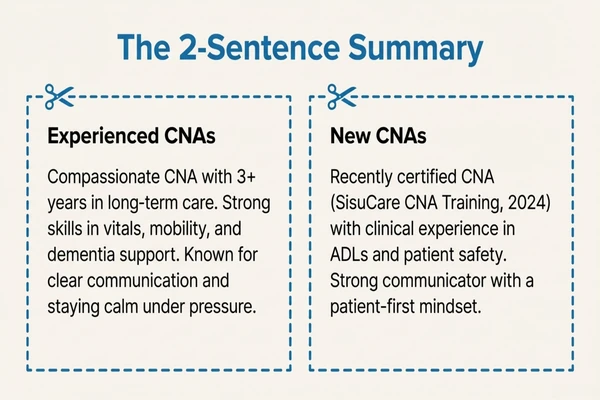
For new CNAs:
Recently certified CNA (SisuCare CNA Training, 2024) with clinical experience in ADLs and patient safety. Strong communicator with a patient-first mindset.
BONUS: Including Too Much Unrelated Experience
Many CNAs worked in other fields before entering healthcare. Including previous jobs can be helpful, especially for new graduates, but listing unrelated responsibilities in detail can distract from the primary goal of the resume.
When non-healthcare experience is included, it is more effective to highlight transferable skills such as teamwork, communication, reliability, and time management.
For example, customer service roles can demonstrate the ability to interact with people professionally and handle stressful situations, both of which are valuable in healthcare environments.
The Value of a Clear, Focused CNA Resume
A CNA resume works best when it communicates three things quickly:
- Certification and qualifications
- Hands-on patient care experience
- Reliability as a member of a healthcare team
When these elements are easy to identify, employers can quickly recognize a candidate’s potential fit for their facility.
Whether applying to hospitals, rehabilitation centers, or long-term care facilities, presenting your experience in a clear and structured way helps hiring managers understand the impact you can bring to patient care.
Need comprehensive CNA training? Learn more at SisuCare CNA Training for certification and real-world healthcare success.
FAQ
How long should a CNA resume be?
One page for new CNAs. Two pages max if you have 5+ years of experience.
Should I include my training program?
Yes, especially if newly certified. List the program name (like SisuCare CNA Training) and completion date.
What if I don’t have much experience?
Focus on clinical rotations, training skills, and transferable experience from other jobs.
Do I need different resumes for each job?
Tailor your summary and top skills to match the job posting keywords.