





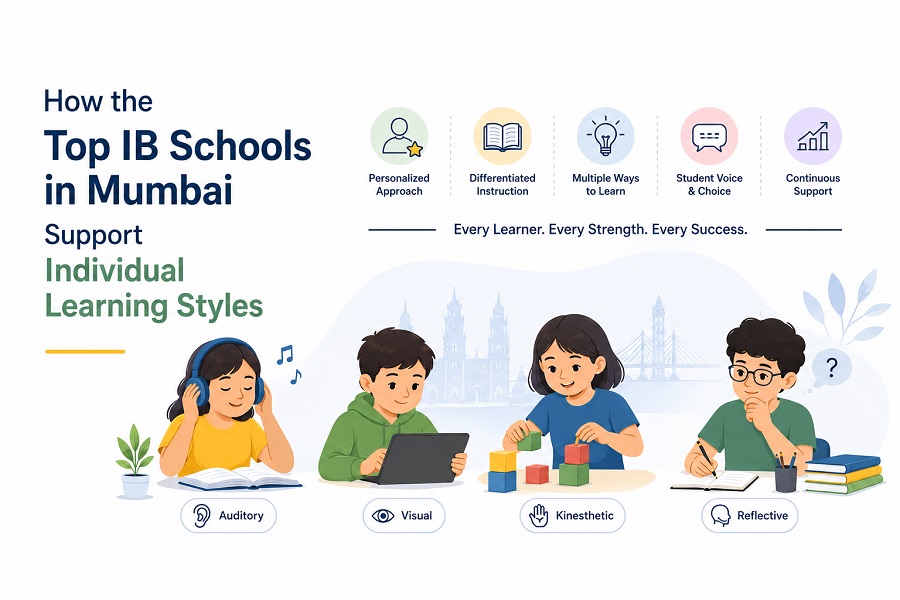
In today’s evolving education landscape, schools are moving beyond traditional teaching methods to embrace more personalised and student-centric approaches. One of the key strengths of modern international education is its ability to recognise that every child learns differently. This is where IB education plays a transformative role by encouraging flexible thinking, inquiry-based learning, and holistic development that aligns with each student’s natural abilities and interests.
The top IB schools in Mumbai are widely recognised for their commitment to understanding and supporting individual learning styles. Instead of following a rigid, one-size-fits-all model, these schools design learning environments that adapt to visual, auditory, kinaesthetic, and reading/writing preferences. Teachers use differentiated instruction strategies, ensuring that students grasp concepts in ways that resonate most effectively with them. This personalised approach helps learners stay more engaged, confident, and motivated throughout their academic journey. As a result, the top IB schools in Mumbai create classrooms where curiosity is encouraged and every student feels valued for their unique strengths.
A core feature of IB education is inquiry-based learning, which naturally supports different learning styles. Students are encouraged to ask questions, explore real-world problems, and develop solutions through critical thinking. This method allows visual learners to benefit from diagrams and presentations, while kinaesthetic learners engage through experiments, projects, and hands-on activities. Auditory learners, on the other hand, gain from discussions, debates, and collaborative sessions. By integrating these varied approaches, IB schools ensure that no learner is left behind and that education becomes an engaging experience rather than a passive one.
Another important aspect is the use of flexible assessment methods. Unlike traditional systems that rely heavily on exams, IB schools evaluate students through projects, presentations, research tasks, and reflective journals. This allows learners with different strengths to demonstrate their understanding in multiple ways. For instance, a student who may not excel in written exams might perform exceptionally well in oral presentations or creative projects. Such inclusive assessment practices are a defining feature of the top IB schools in Mumbai, helping students build confidence and showcase their true potential.
Technology also plays a significant role in supporting diverse learning preferences. Interactive tools, digital simulations, and personalised learning platforms enable students to learn at their own pace. Teachers can track progress and adjust lesson plans based on individual needs, ensuring continuous improvement. This tech-enabled learning environment enhances accessibility and ensures that students receive the right level of challenge and support at every stage.
In addition to academics, IB schools place strong emphasis on emotional and social development. Students are encouraged to participate in group activities, community service, and collaborative projects. These experiences help them develop communication skills, empathy, and teamwork, all of which are essential for lifelong success. By nurturing both intellectual and emotional growth, the top IB schools in Mumbai prepare students to become well-rounded individuals who can adapt to different situations with confidence.
Teacher mentorship is another key pillar of personalised learning in IB education. Educators act as facilitators rather than just instructors, guiding students based on their individual progress and learning preferences. Regular feedback sessions and one-on-one interactions ensure that students receive continuous support and direction. This strong teacher-student relationship builds trust and encourages learners to take ownership of their education.
In conclusion, modern education is most effective when it recognises and respects the diversity of learning styles among students. The top IB schools in Mumbai excel in creating inclusive, flexible, and engaging learning environments that cater to individual needs. Through personalised teaching methods, varied assessments, and holistic development practices, they empower students to reach their full potential and develop a lifelong love for learning.